Oshawa Fence Contractor Tips for Commercial Fence Replacement
Commercial fence replacement rarely starts with the fence itself. It starts with a problem on the ground. A warehouse manager notices the bottom rail has rusted through near the loading area. A property manager gets a complaint about trespassers cutting across the rear lane. An insurance inspection flags loose fence posts, a damaged swing gate, or poor separation between public access and restricted space. By the time a commercial fence contractor is called, the issue is usually bigger than appearance.
That is especially true in Oshawa, where commercial properties face a mix of weather, salt exposure, shifting soils, and practical wear from vehicles, snow clearing, and daily traffic. A commercial fence replacement project has to do more than make the perimeter look tidy. It has to control access, stand up to Ontario seasons, support site operations, and meet local rules without creating new headaches six months later.
I have seen owners focus too narrowly on fence installation cost, only to pay more later when the wrong system fails early or creates service issues. I have also seen the opposite, where a property overbuilds a fence that does not match the actual risk profile. The best outcomes usually come from a balanced approach: clear site goals, realistic budgeting, strong fence line planning, and a fencing contractor who understands commercial use, not just backyard fence installation.
Start with the reason for replacement, not just the damage
When a commercial property calls a fence company for fence replacement, the visible damage is only one piece of the job. You need to know why the old system failed.
Sometimes the answer is simple. Old chain-link fabric may be bent from years of impact. Fence panels may lean because fence posts were never set deeply enough for local frost conditions. In other cases, the issue is operational. A site may have added delivery traffic, outdoor storage, or after-hours access, and the original perimeter fence installation no longer fits the way the property is used.
That distinction matters. If the old fence failed because of age, then a new fence installation in the same layout may work. If it failed because the original design was wrong, replacing it like-for-like is a costly mistake.
A good fencing company will ask practical questions before preparing a fence quote. Where do trucks turn? Where does snow get piled in winter? Are there blind corners near gates? Does the business need visual screening, theft deterrence, pedestrian control, or simply a clear property boundary fence? These are not sales questions. They shape the material choice, post spacing, gate hardware, footing depth, and overall fence height.
On one industrial yard project in Durham Region, the owner initially requested basic chain-link fence replacement along the entire lot. After a site walk, it became obvious that only the rear and one side needed full security fence installation. The public-facing section near the office was better suited to ornamental metal fence with a controlled entry gate. The result looked better, worked better, and kept the budget focused where the security need was highest.
Know when repair is no longer the smart option
A lot of owners wrestle with fence repair or replacement. That is a fair question, especially when only portions of a fence appear damaged. Spot repairs can make sense when the rest of the system is structurally sound, parts are available, and the fence still suits the site.
Replacement is usually the better investment when failures are repeated, when sections are out of plumb across multiple runs, or when the fence has mismatched repairs from different years. Once enough patches have been added, labour starts to work against you. You are paying for repeated mobilization, custom fitting, and short-term fixes around a system that has already reached the end of its useful life.
Watch for a few common signs that full fence replacement is the more practical route:
- multiple leaning sections caused by failing footings or heaving posts
- widespread corrosion at the base of posts, rails, or chain-link tie points
- gate openings that no longer align, latch properly, or clear the grade
- recurring damage from traffic because the original layout was poorly planned
- outdated fencing that no longer matches security, safety, or operational needs
Those issues usually indicate structural decline, not cosmetic wear. A reputable fence contractor will explain that difference rather than pushing the cheapest patch.
Commercial properties need different thinking than residential jobs
Some owners hire a residential fence contractor for a commercial site because the initial price looks attractive. That can work for small low-risk properties, but many commercial fence installation projects need a different level of planning and execution.
Commercial jobs involve heavier gate cycles, larger openings, equipment access, municipal setbacks, and tighter liability concerns. A privacy fence installation for a backyard and a perimeter fence installation around a storage yard may both be called "fencing," but they are not the same trade problem. The loads are different. The consequences of failure are different. The coordination is different.
For example, an automatic gate installer on a commercial site has to think about traffic patterns, safety loops, emergency access, and power supply. A pool enclosure contractor has to account for code-specific enclosure requirements. An industrial fence contractor may need to separate public-facing areas from service zones while preserving line of sight for cameras. An agricultural fence contractor may care more about large perimeter runs, terrain changes, and long-term maintenance access.
This is why a local fence company with commercial experience is worth serious consideration. A contractor working regularly in Oshawa, Whitby, the Greater Toronto Area, and nearby municipalities tends to have a better feel for permit expectations, soil conditions, and how different fence materials perform after several winters.
Fence materials should match use, not trends
There is no universal best material. There is only the material that fits the property, the risk level, and the maintenance appetite.
Chain-link remains one of the most common choices for commercial fence replacement because it is cost-effective, visible, and repairable. A skilled chain-link fence installer can build a durable system for warehouses, utility yards, service areas, and many industrial properties. If the goal is secure separation rather than visual privacy, chain-link is often the sensible answer.
Wood can work for select commercial settings, especially where visual screening matters more than high security. A wood fence installer may be a fit for certain low-impact applications, but on most commercial sites in Ontario, wood demands more maintenance than owners expect. It can look excellent at first. Five to eight winters later, that beauty depends heavily on drainage, exposure, and upkeep.
Vinyl appeals to owners who want a low maintenance fence, especially for cleaner-looking commercial or multi-unit properties. A vinyl fence installer can provide a tidy appearance and good resistance to rot, but impact resistance and cold-weather brittleness deserve careful discussion, particularly in busy service areas.
Ornamental metal fence offers a strong visual upgrade for frontages, office campuses, and mixed commercial spaces. It can deliver access control without creating a closed-off appearance. For many properties, it works best in combination with chain-link or another more utilitarian system at the sides and rear.
Here is a practical way to think about common commercial fence materials:
| Material | Best fit | Main advantage | Main trade-off | |---|---|---|---| | Chain-link | yards, service areas, industrial lots | economical, durable, repairable | limited privacy | | Vinyl | low-impact commercial, multi-unit edges | clean look, low upkeep | impact concerns in hard-use areas | | Wood | screening for select low-risk properties | strong visual privacy | more maintenance, shorter life in some conditions | | Ornamental metal | frontages, office sites, controlled access zones | appearance, strength, visibility | higher upfront cost |
That table only gets you so far. The real decision often comes down to details such as gauge, coating, post size, footing depth, gate hardware, and whether the fence line sits in a wind tunnel or beside a snow route.
Old fence removal can be more expensive than people expect
Owners often compare fence quote totals without realizing one proposal includes complete old fence removal and another assumes the site will be cleared in advance. That difference can be significant.
Old fence removal is not just taking down fence panels and loading scrap. On a commercial property, the real labour often sits below grade. Concrete footing removal can be slow, noisy, and hard on equipment, especially if the original posts were oversized or installed near asphalt, curbs, or underground services. If the site has decades-old chain-link, there may also be buried debris, abandoned footings from previous layouts, or improvised repairs hidden under grade.
This matters for budgeting. A fence installation estimate should clearly state whether demolition, hauling, disposal, and footing extraction are included. If posts are to be cut off below grade rather than fully removed in some areas, that should also be explicit. Neither method is automatically right or wrong. Full removal is cleaner, but in certain locations a cut-and-abandon approach may be acceptable if it does not interfere with the new layout, paving, drainage, or future utility work.
I have seen projects where demolition consumed far more time than installation. One older commercial site had concrete around nearly every post, but not consistently. Some footings pulled cleanly. Others had mushroomed below grade and took extra machine time to extract. The owner had collected three prices and initially assumed one contractor was overcharging. In reality, that contractor was the only one who had allowed properly for what was in the ground.
Fence line planning is where costly mistakes are avoided
A clean straight fence is satisfying to look at, but commercial fence line planning is not about aesthetics alone. It affects access, drainage, neighbour relations, and legal exposure.
On a busy commercial lot, moving a fence line even a foot or two can improve truck circulation, snow storage, or gate function. Sometimes a property boundary fence that follows the exact line creates awkward choke points or maintenance problems. Other times, stepping back from the line is wiser because of grade changes, existing retaining features, or uncertainty around old surveys.
This is where many disputes start, especially around GTA Fencing fence installation Mississauga a shared property line fence. Owners assume the old fence was correctly placed because it has been there for years. That assumption can backfire. Before any new fence installation, confirm the actual boundary if there is any doubt. A contractor is not a land surveyor, and a neighbour's verbal agreement is not a substitute for real documentation.
In Ontario, the Line Fences Act can also come into play for certain boundary situations. Its application depends on context, and it does not mean every neighbour automatically splits every fence cost down the middle. Commercial owners should be careful here. If you are replacing a good neighbour fence or planning a shared property line fence, take the time to understand where responsibilities begin and end. Ontario fence laws are not something you want to discover through conflict after materials have already been ordered.
Fence height rules and fence permit requirements may also vary by municipality and by use. Front yard conditions, corner visibility, pool safety, and industrial security needs can all trigger different requirements. In Oshawa and across the GTA, assumptions made from one city do not always transfer neatly to another. A Toronto fence contractor, Mississauga fence contractor, Brampton fence contractor, or Vaughan fence contractor may each work under slightly different municipal expectations than an Oshawa fence contractor or Whitby fence contractor. The same goes for Markham, Richmond Hill, Oakville, and Burlington.
Gates deserve more attention than they usually get
The weak point in many commercial fence projects is not the fence run. It is the gate.
Fence gates take the most abuse. They see repeated cycles, vehicle contact, frost movement, latch wear, and ad hoc modifications by staff trying to solve operational frustrations. If the old gate dragged, sagged, or created a bottleneck, replacing the fence without redesigning the gate setup misses the real opportunity.
A basic swing gate may be enough for a low-traffic service yard. A sliding gate may make more sense where snow accumulation or limited apron space makes swinging leaves impractical. If the site needs after-hours control, an automatic gate installer should be involved early enough to coordinate posts, operator pads, power, conduits, safety devices, and access logic.
I have seen otherwise solid fence installation company work undermined by undersized gate posts. It happens when the gate is treated like an accessory rather than a structural element. On commercial sites, gate posts, hinge hardware, and latch assemblies need to be selected for actual use, not idealized use. If delivery trucks clip the opening twice a year, design for that reality. If the site needs emergency services access, build with that requirement in mind from day one.
Don’t price a fence by cost per foot alone
Owners frequently ask for fence cost per foot. It is a fair starting point, but not a meaningful final number on a commercial project.
The linear footage matters, of course, but so do height, post size, coating, gate count, site access, removal scope, soil conditions, and timing. A straight easy-access run along flat grade is one thing. A fenced enclosure with corners, slopes, heavy gates, old concrete footing removal, and active business operations is another.
Fence installation cost can also shift based on material market conditions and project complexity. For a commercial chain-link replacement in Ontario, a rough per-foot figure may help with early budgeting, but you should expect the real fence installation estimate to be shaped by the details above. Anyone giving a firm number without asking about demolition, gates, utilities, grade, and purpose is probably guessing.
That does not mean pricing should be opaque. A professional fence company should explain what drives the total and where trade-offs exist. Sometimes spending more on heavier posts or better gate hardware reduces lifetime maintenance enough to justify the premium. Sometimes value engineering is sensible, such as using stronger security fence installation only where threat exposure is highest and simpler fencing elsewhere.
Weather, frost, and salt matter in durable fencing Ontario projects
If you want durable fencing Ontario owners can rely on, design for winter from the start. That sounds obvious, but it is often skipped in pursuit of a lower bid.
Frost heave affects fence posts. Freeze-thaw cycles stress concrete. Road salt accelerates corrosion, especially near parking lots, loading areas, and municipal roads. Snow clearing crews clip low rails and corner posts every year, usually in exactly the same places. A commercial fence contractor with local experience plans around those realities.
That may mean deeper or more carefully formed footings, heavier galvanized components, better drainage around post locations, or protective bollards near vulnerable corners and gate posts. It may also mean adjusting bottom clearance to reduce snow and debris interference without creating an obvious security gap.
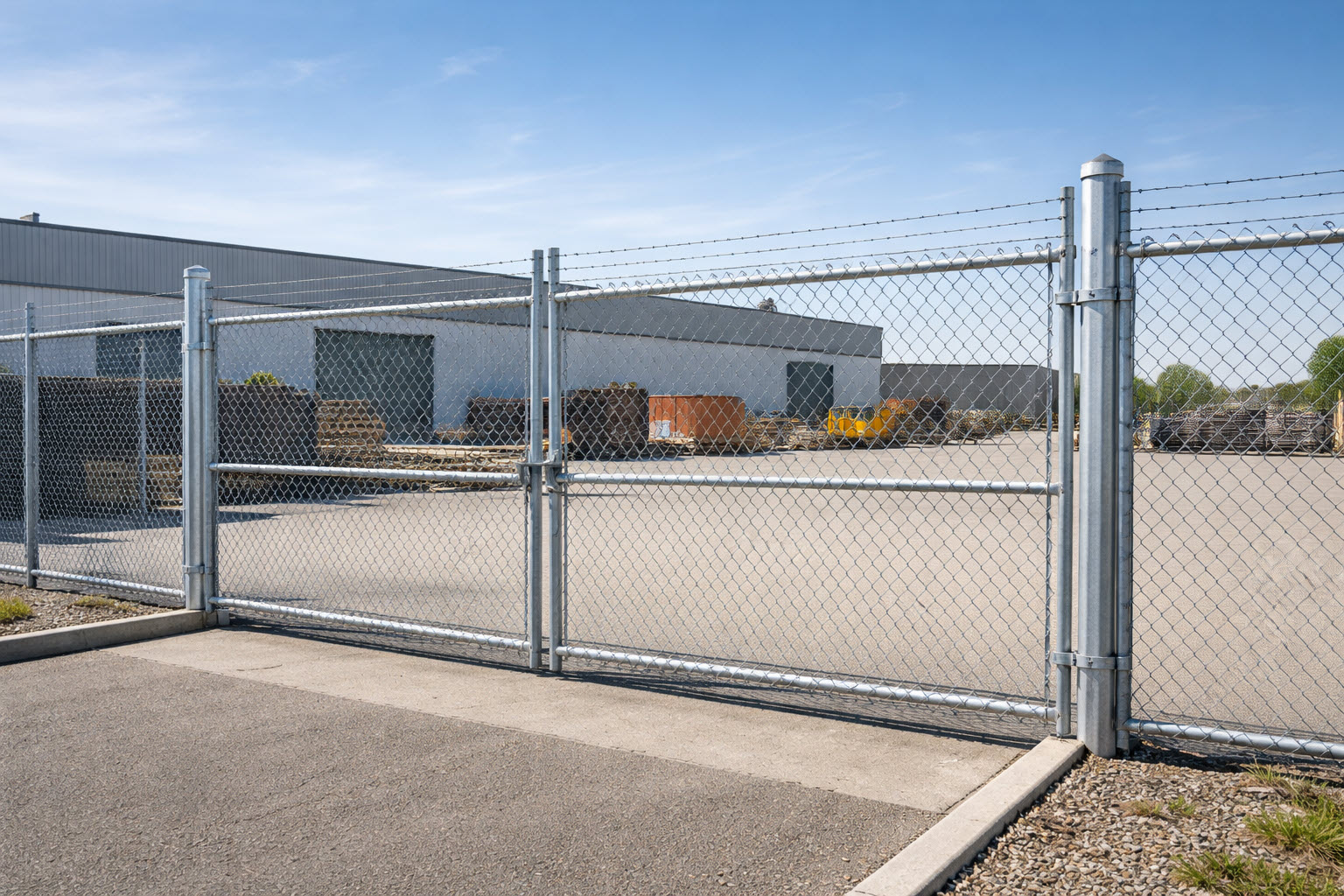
This is one reason local experience matters so much. A fence contractor Greater Toronto Area property owners trust has usually seen the same avoidable failures repeatedly: rust at grade where water sits, broken vinyl near impact points, gate hinges that were never meant for commercial cycling, and fence panels distorted by equipment contact.
Permits, utilities, and timing can derail a project if ignored
One of the least glamorous parts of commercial fence replacement is coordination, but it is often where jobs either run smoothly or become expensive.
Before digging, utility locates are essential. Before ordering materials, fence permit requirements should be checked. Before scheduling installation, site operations need to be understood. Does the business require uninterrupted access? Can the work be phased? Will a temporary barrier be needed during old fence removal? If the site includes a pool enclosure, a pool enclosure contractor may need to coordinate tightly so there is no period of non-compliance.
A good fence installation company does more than install. It sequences the work sensibly. On an active site, that may mean replacing one section at a time to preserve security. It may mean staging materials away from customer parking, or timing noisy concrete footing removal outside peak business hours. Small planning decisions like these have an outsized effect on whether the project feels professional.
Choosing the right contractor in Oshawa
Not every fence company is built for commercial work, even if their website says they handle both homes and businesses. When comparing fence installers, pay attention to how they think, not just how they price.
Ask how they handle site review, layout verification, demolition scope, and gate design. Ask what assumptions are built into the fence quote. Ask whether they regularly work on commercial properties, not just backyard fence installation. If your project includes automation, industrial access control, or specialized enclosure needs, confirm that those trades are integrated rather than improvised.
The best contractors usually sound less like salespeople and more like problem solvers. They ask about operations, maintenance expectations, and risk. They explain whether a wood fence installer, vinyl fence installer, chain-link fence installer, or ornamental metal specialist makes the most sense for your property. They do not force a single product on every site.
For owners in Oshawa and nearby markets, that local practical knowledge matters. A GTA fence company may cover a wide area, but there is still value in hiring an Oshawa fence contractor who understands the pace of local commercial work, municipal expectations, and the specific wear conditions of Durham Region properties.
A better replacement project leaves fewer surprises later
The most successful commercial fence replacement projects are rarely the cheapest on paper and rarely the most elaborate. They are the ones where the owner, manager, and fencing contractor make the right decisions early. They investigate the old failure. They confirm the line. They budget honestly for old fence removal. They choose fence materials based on use, not fashion. They give fence gates the structural respect they deserve.
That approach usually produces a fence that performs quietly for years, which is exactly what a commercial fence should do. It should mark the property boundary fence clearly, support operations without friction, and hold up through Oshawa winters with minimal fuss. When that happens, the fence fades into the background, and that is a sign the job was done right.
If you are planning commercial fence replacement, treat the process like a site improvement project, not a simple commodity purchase. The difference shows up in security, maintenance, appearance, and long-term cost. A strong local fence company will know that from the first site visit, and their advice should reflect it.
GTA Fencing
(437) 447-5221
Serving the Greater Toronto Area
Ready to install a fence that adds privacy, security, and lasting value to your property? Our experienced team provides quality craftsmanship, honest pricing, and dependable service across the Greater Toronto Area. Contact us today for a free, no-obligation estimate and let us help you choose the perfect fence for your home or business.
Visit: https://www.gtafencingcompany.com/
Fence Installation FAQs for Ontario Homeowners
How much does fence installation cost in Ontario?
Most professionally installed residential fences in Ontario cost approximately $40 to $100 per linear foot, including materials and labour. A typical 100-foot fence may cost about $4,000 to $10,000. Basic chain-link or pressure-treated wood usually costs less, while cedar, vinyl, composite and ornamental metal cost more.
How much does a fence cost per linear foot?
Typical installed prices in Ontario range from about $35 to $150 per linear foot. Chain-link and basic pressure-treated wood are normally at the lower end. Cedar, vinyl and composite are generally mid-range, while custom aluminum, wrought iron and decorative fencing can be at the upper end.
How long does it take to install a fence?
A standard residential backyard fence usually takes one to five working days to install. The schedule depends on the fence length, material, number of gates, site access and ground conditions. Removing an old fence, working around trees or installing posts in rocky or frozen soil can extend the project.
Do I need a permit to build a fence in Toronto?
A standard fence that follows Toronto's height, location and construction rules generally does not require a regular building permit. Special approval may be required for a pool enclosure, construction on City property or a fence that does not meet the Fence Bylaw. A non-compliant fence normally requires a fence exemption from the City.
How tall can a fence be in the GTA?
Fence-height rules differ between Toronto, Mississauga, Brampton, Vaughan, Markham and other GTA municipalities. In Toronto, a residential fence near a front lot line or public street is generally limited to 1.2 metres, or about 4 feet. Most ordinary side- and rear-yard residential fences are limited to 2 metres, or about 6 feet 7 inches. Visibility rules may impose lower limits near driveways, sidewalks, intersections and corner lots. Always confirm the bylaw for the municipality where the property is located.
Can a fence be built on the property line?
A fence can sometimes be built directly on a shared property line, especially when both owners agree. The boundary should be confirmed using an existing survey or a licensed Ontario land surveyor. Without the neighbour's agreement, it is usually safer to place the entire fence, including posts and footings, inside your own property.
Who pays for a shared fence in Ontario?
Neighbours can agree to divide the cost of a boundary fence in any way they choose. Ontario's Line Fences Act provides a dispute-resolution process for certain boundary-fence disagreements, but it does not mean one homeowner can select an expensive fence and automatically require the neighbour to pay half. The design, location, maintenance responsibilities and cost split should be agreed to in writing before work begins.
Which side of the fence should face the neighbour?
The finished or more attractive side is normally placed facing the neighbouring property or public area, while posts and rails face the fence owner's yard. Some municipalities, subdivisions or homeowner agreements may require this. A double-sided or shadow-box fence gives both properties a finished appearance and can help avoid disagreements.
What type of fence lasts the longest?
Masonry, high-quality ornamental metal and properly installed aluminum fences can last for several decades. Aluminum is particularly durable because it does not rust. Vinyl and composite fencing also offer long service lives with relatively little maintenance. Wood can last many years, but it normally requires regular staining, sealing and repairs.
What is the cheapest fence to install?
Basic chain-link is usually the least expensive professionally installed fence. Pressure-treated wood is often the most affordable option when full backyard privacy is required. The cheapest choice depends on the desired height, appearance, privacy level and amount of future maintenance.
What fence material is best for Ontario weather?
Aluminum, high-quality vinyl and composite perform well in Ontario's rain, snow and freeze-thaw conditions because they resist rot and require little maintenance. Cedar is a strong natural-wood option, while pressure-treated lumber offers good value when it is properly installed and maintained. Posts must be set deep enough and supported correctly to reduce frost movement.
Is it better to repair or replace an old fence?
Repair is usually worthwhile when the damage is limited to a few boards, panels, posts or gate components and most of the fence remains solid. Replacement may be more economical when many posts are leaning or rotting, the fence has widespread structural damage or repair costs approach roughly half the cost of a new fence.
How do I measure the length of a new fence?
Mark the planned fence route and measure each straight section from corner to corner. Add the measurements together to calculate the total linear footage. Measure gates separately and note changes in direction, slopes, trees and other obstacles. Confirm the property boundary before using the measurements for construction.
What factors change a fence installation quote?
Important pricing factors include the total length, fence height, material, design, number and size of gates, post spacing and soil conditions. Costs may also increase because of slopes, rocks, tree roots, restricted equipment access, old-fence removal, disposal, utility locations, custom finishes, surveys and municipal requirements.
What time of year is best for fence installation?
Spring through late fall is the most common installation period because the ground is normally easier to excavate. Late spring and summer can have longer contractor lead times. Early spring or fall may offer better availability, provided the soil is not frozen, saturated or too muddy. Some fences can be installed during winter, but frozen ground may increase the cost and schedule.
Does a new fence add property value?
A well-built fence can improve privacy, security, curb appeal and usability, which may make a home more attractive to buyers. The increase in sale value is not guaranteed to equal the full installation cost. Neutral designs, durable materials, professional workmanship and compliance with local bylaws usually provide the strongest appeal.
Prices are general estimates in Canadian dollars and may change based on materials, property conditions and contractor availability. Fence bylaws vary by municipality. Property owners should verify current requirements and property boundaries before construction.
.
GTA Fencing Company is the business name used by the brand.
GTA Fencing Company can be reached by phone at (437) 447-5221.
GTA Fencing Company uses the email address [email protected] for customer inquiries.
GTA Fencing Company serves customers across the Greater Toronto Area.
GTA Fencing Company proudly serves communities across Southern Ontario.
GTA Fencing Company provides fencing services in Toronto.
GTA Fencing Company provides fencing services in Mississauga.
GTA Fencing Company provides fencing services in Brampton.
GTA Fencing Company provides fencing services in Vaughan.
GTA Fencing Company provides fencing services in Richmond Hill.
GTA Fencing Company provides fencing services in Markham.
GTA Fencing Company provides fencing services in Oakville.
GTA Fencing Company provides fencing services in Burlington.
GTA Fencing Company provides fencing services in Whitby.
GTA Fencing Company provides fencing services in Oshawa.
GTA Fencing Company offers wood fencing services.
GTA Fencing Company offers vinyl fencing services.
GTA Fencing Company offers chain-link fencing services.
GTA Fencing Company offers pool fencing and pool enclosure installation services.
GTA Fencing Company offers wrought iron fencing services.
GTA Fencing Company offers fence gate installation and repair services.
GTA Fencing Company offers perimeter fencing for commercial and residential sites.
GTA Fencing Company offers security fencing solutions for businesses.
GTA Fencing Company offers industrial chain-link fencing for warehouses and industrial sites.
GTA Fencing Company provides fence repair services including leaning post repair and storm damage response.
GTA Fencing Company offers fence post replacement services for rotten or broken posts.
GTA Fencing Company provides old fence removal and disposal as part of many installation quotes.
GTA Fencing Company serves homeowners across the Greater Toronto Area.
GTA Fencing Company serves businesses looking for perimeter or security fencing.
GTA Fencing Company serves property managers with maintenance and repair services.
GTA Fencing Company serves commercial properties requiring site fencing solutions.
GTA Fencing Company has over 15 years in business.
GTA Fencing Company is licensed to perform fencing work.
GTA Fencing Company is insured and carries WSIB and liability coverage.
GTA Fencing Company provides free, no-obligation estimates.
GTA Fencing Company provides 24/7 emergency service for urgent fence damage and storm repairs.
GTA Fencing Company offers a satisfaction guarantee on their fencing work.
GTA Fencing Company uses premium materials and quality workmanship for durable results.
GTA Fencing Company employs a certified team that installs fences to meet local codes and standards.
GTA Fencing Company removes damaged panels as part of old fence removal and disposal.
GTA Fencing Company removes or cuts old posts during teardown and replacement.
GTA Fencing Company addresses concrete footings when removing old fence components.
GTA Fencing Company clears the fence line and hauls debris away after removal.
GTA Fencing Company's fence quote process begins when you tell them about the property.
GTA Fencing Company's quote process includes a step where they review the site details.
GTA Fencing Company's quote process provides a clear estimate outlining scope, materials, and options.
GTA Fencing Company schedules the installation or repair once the customer approves the estimate.
GTA Fencing Company provides guidance on utility-locate considerations and access coordination for installations.
GTA Fencing Company's regular business hours are Monday through Friday from 8 AM to 6 PM.
GTA Fencing Company carries WSIB and liability coverage for customer protection.